Welcome to Faculty of Divine Feminine Studies!
Explore our growing collection of 50+ teachings and resources on Nwanyibuife—the Divine Feminine to deepen your understanding from the lens of Igbo worlview.
Search results will show you available teachings organized by category for easier navigation.
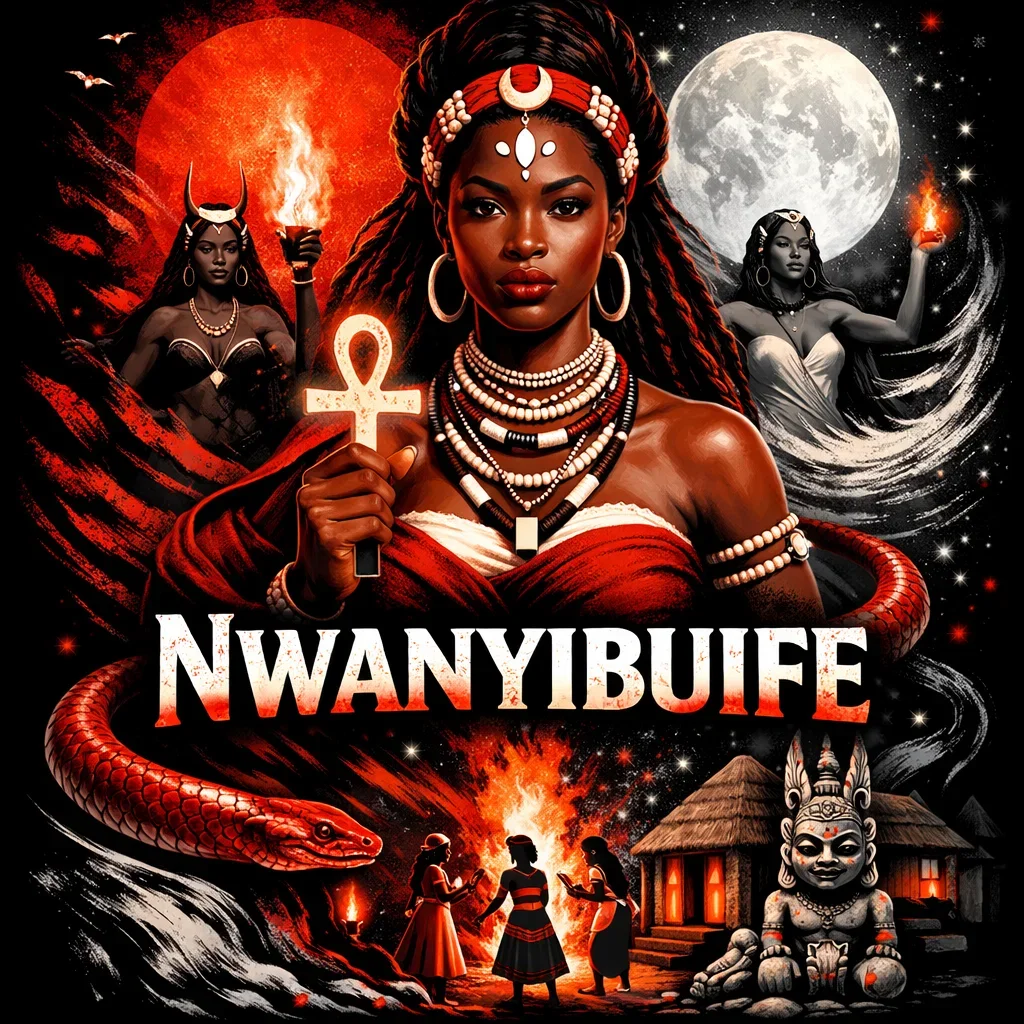
The Philosophy of Nwanyibuife in Igbo Worldview
Nwanyibuife is far more than a title meaning “a woman of substance”; it expresses the ancient Igbo understanding that a woman is a sacred force of creation, light, and manifestation. As the embodiment of Akwu, the generative principle, and the closest physical reflection of Nnechukwu Okike, the Divine Mother of Creation, she symbolizes the power that conceives, nurtures, sustains, and transforms life. Associated with the moon, the earth, the waters, and the mysteries of intuition, womanhood in this philosophy represents the total complexity of nature itself—gentle yet powerful, nurturing yet formidable, receptive yet profoundly creative. Nwanyibuife therefore recognizes the woman not merely as a participant in creation, but as one of its highest living expressions.

Mma Oge – The Time Knife as a Defensive Symbol for Igbo Women
Mma Oge, the Time Knife, symbolizes the outstanding power of the Igbo woman as both nurturer and protector, embodying the archetype of Nnekelechi—the divine mother who creates and defends life. Traditionally placed beneath the pillow, it represents vigilance, spiritual protection, and readiness even in rest. Beyond its physical form, the knife reflects a sacred duality of the ability to cut through illusion, ward off harm, and act with precision while upholding moral balance. In this way, Mma Oge affirms that true feminine power lies not only in giving life, but in fiercely safeguarding it—physically, spiritually, and across time.
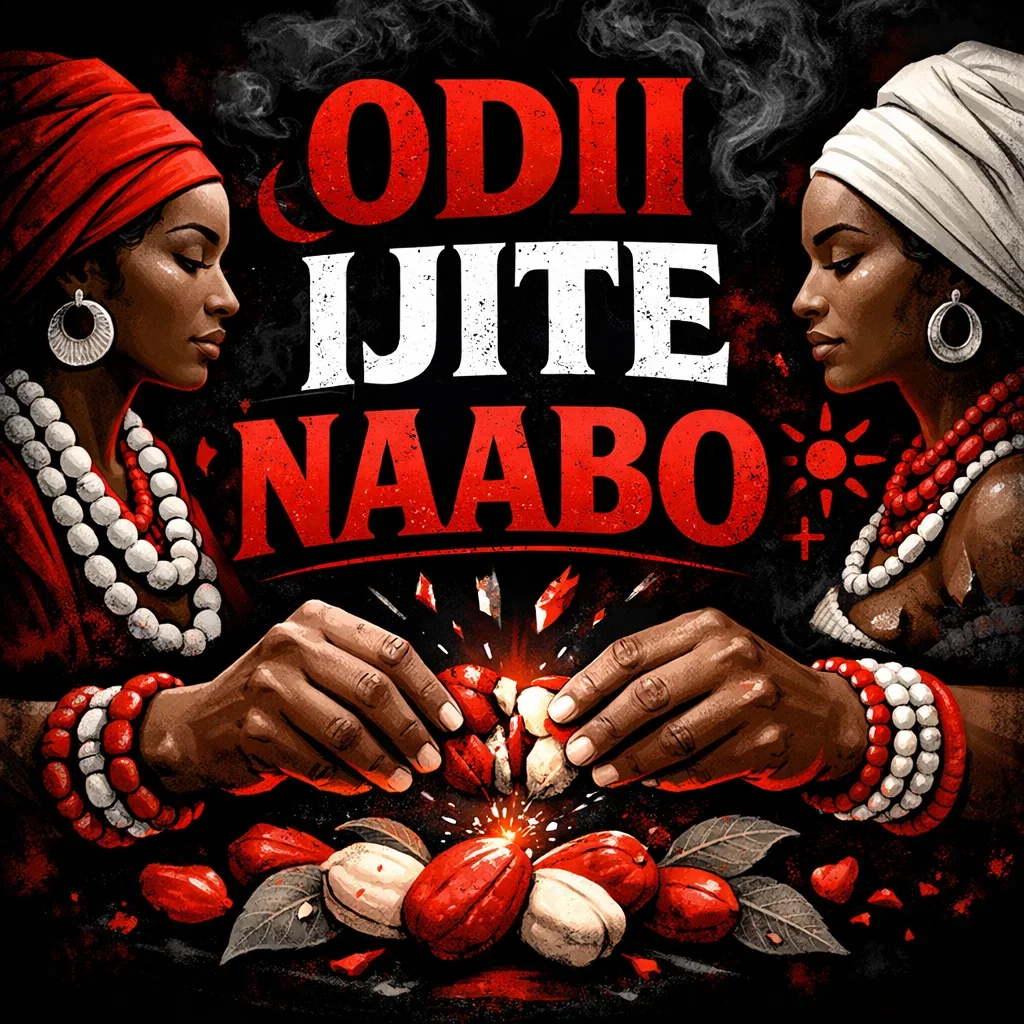
Why Agbara Nwanyi Are in the Best Position to Break Oji
In ancient mystical practice, an Agbara Nwanyi, a woman deeply aligned with her divine feminine essence, holds a unique power in breaking Oji (kolanut), as she naturally embodies Odii Ogwute, the primordial Earth force of creation. Through her, the ancient order is reenacted: from the divine feminine source comes Being (Eke), and from Being comes the world. When such a woman speaks over and breaks Oji, her words carry Akwu Ose, the force that anchors intention as spiritual potency into reality, making manifestation possible. This is why the act is most potent in the hands of a spiritually aware woman—especially one’s mother, the first priest of one’s life—whose invocation can open pathways for transformation, blessing, and new realities to emerge.
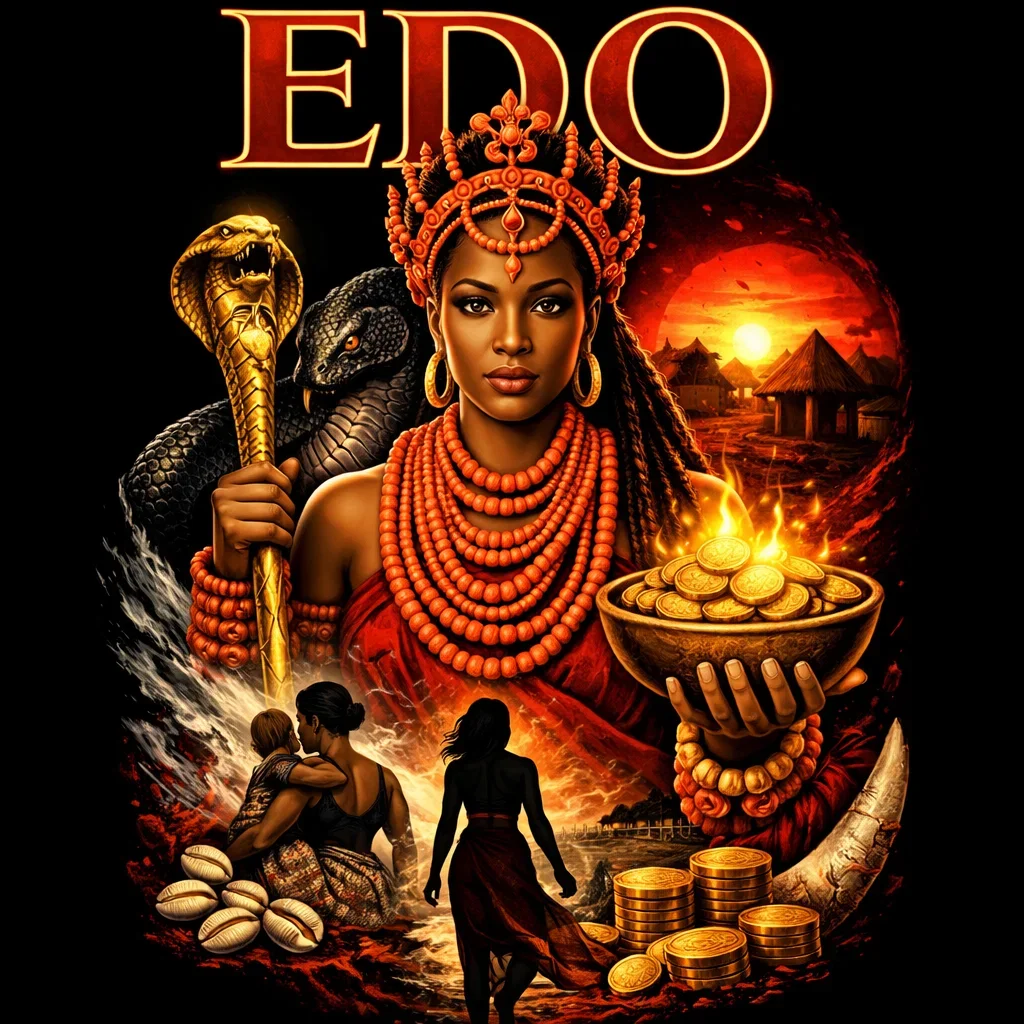
What We Can Learn From Edo on the Divine Feminine
Edo teaches us that the divine feminine is rooted in self-worth, clarity, and aligned abundance. As the golden daughter of Idemmili and a custodian of wealth, she shows that true prosperity flows from knowing your value and honoring your origins. Her willingness to walk away from disrespect reveals that dignity must never be compromised, while her openness to new union reflects the power of renewal after alignment. As a guardian, landowner, and mother of a people, Edo embodies a feminine energy that builds, protects, and sustains with purpose. Her wisdom reminds us that when you see clearly, value yourself fully, and move with integrity, both spiritual and material wealth follow.
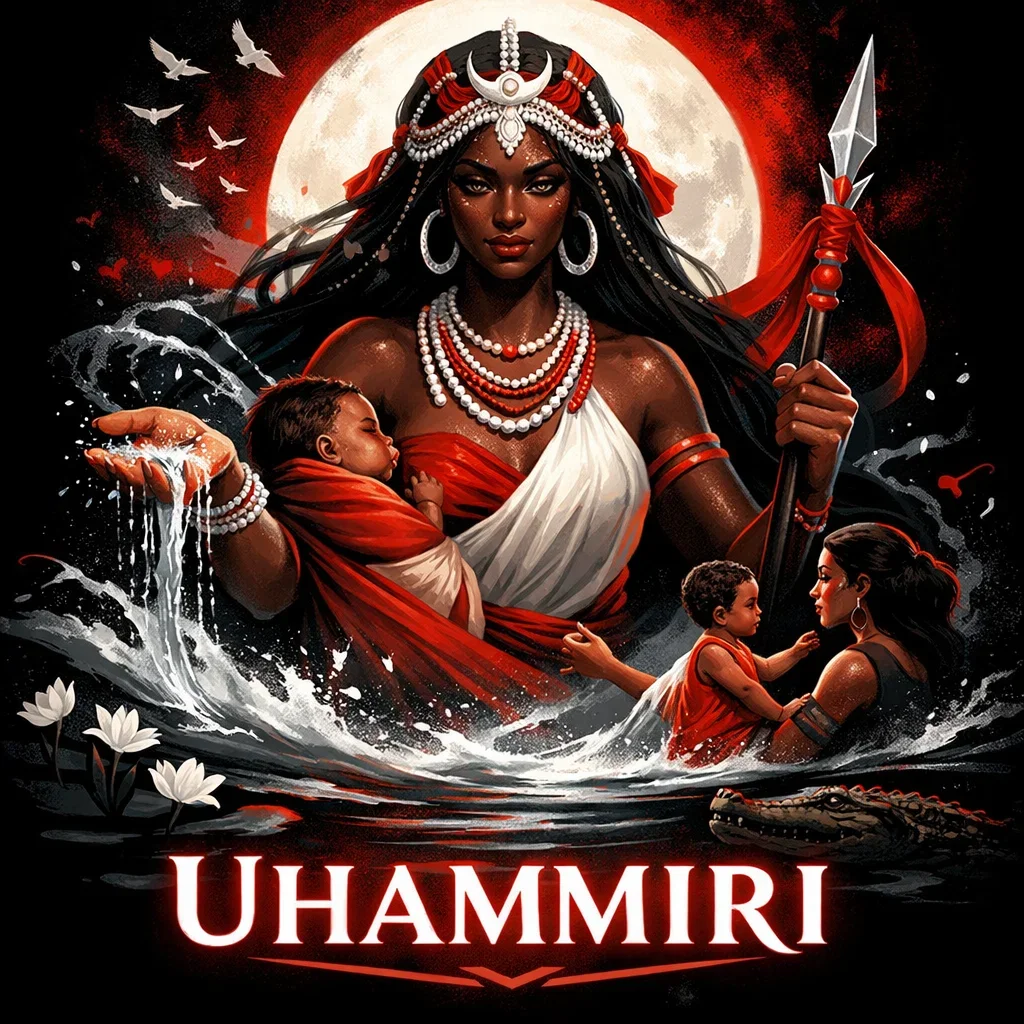
What We Can Learn From Ogbuide on the Divine Feminine
Ogbuide teaches us that the divine feminine is both nurturing and powerful, like water—able to sustain life while holding depth and strength. As a lake goddess rooted in community, she shows that true power is grounded and relational, yet expansive enough to hold multiple roles and identities. Her dual nature reminds us that kindness must be balanced with firm boundaries, while her role as a provider and mother highlights generosity, care, and responsibility for others, especially the vulnerable. Through her relationships, radiance, and protective presence, Ogbuide reveals a feminine energy that flows, adapts, and gives abundantly without losing its strength or essence.
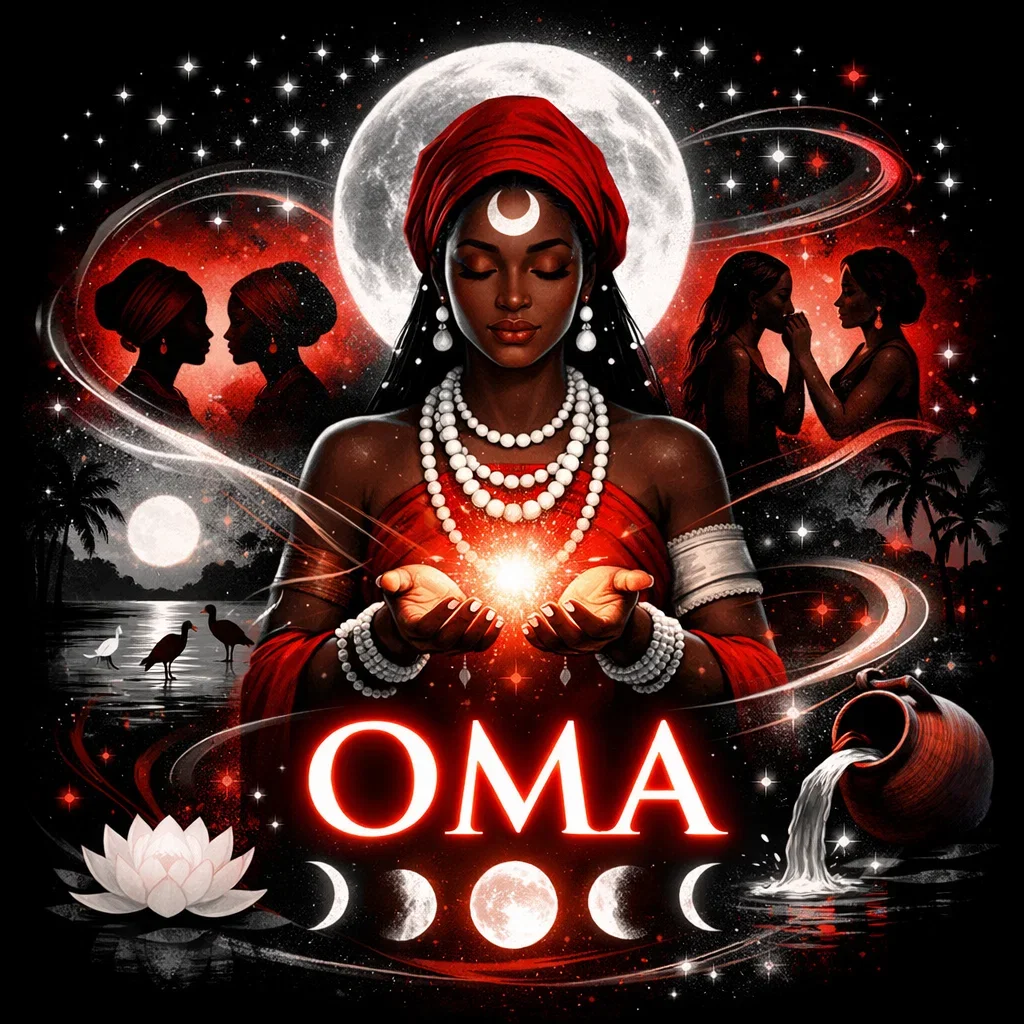
What We Can Learn From Oma on the Divine Feminine
Oma teaches us that the divine feminine leads through light, rhythm, and relationship rather than force. As Moon Goddess and ruler of emotions and intuition, she shows that clarity comes from listening inwardly and honoring cycles. As the first daughter and first Igbo woman, she establishes daughterhood, sisterhood, and nurturing as sacred foundations of life. Through her purity, her role in resolving conflict, and her influence over lunar and water cycles, Oma reveals a feminine power that works in harmony with others, guides gently, and raises consciousness over time. Her wisdom reminds us that true illumination is steady, relational, and timed.
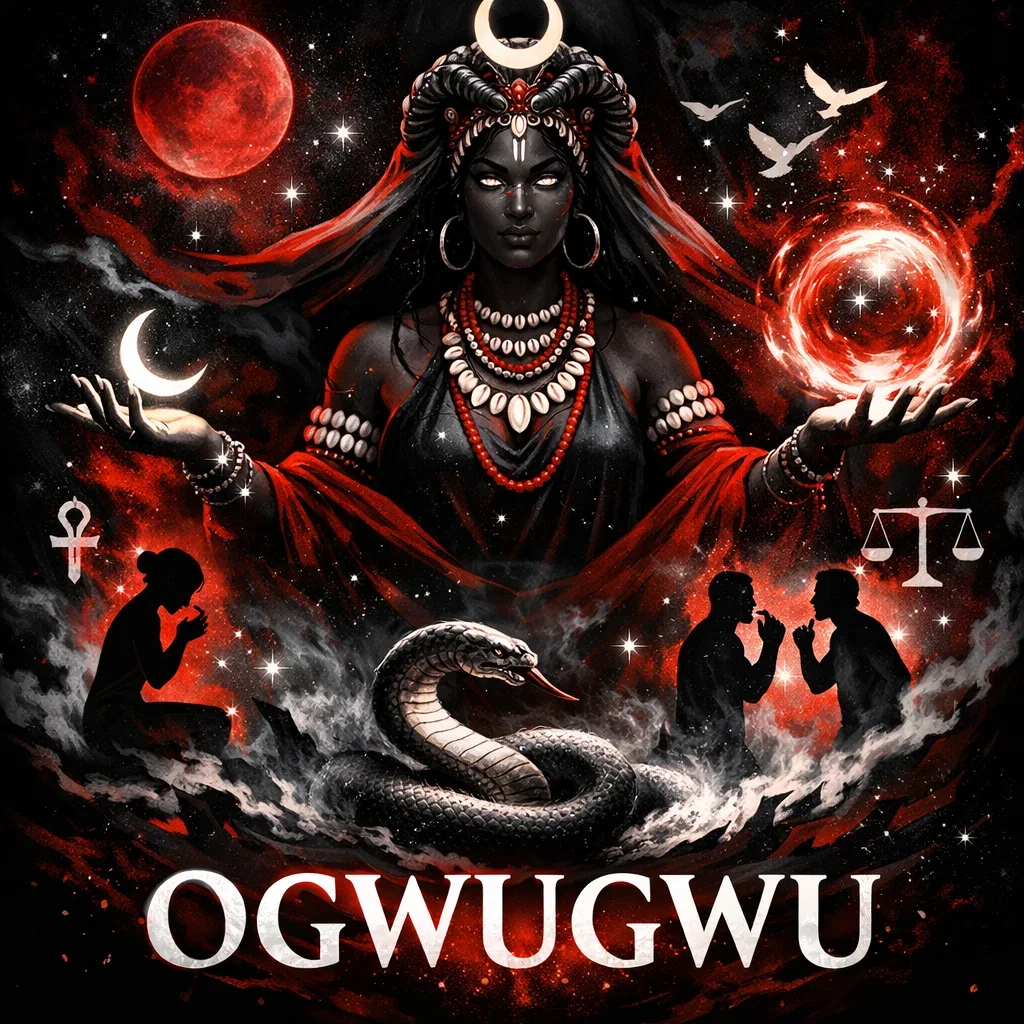
What We Can Learn From Ogwugwu on the Divine Feminine
Ogwugwu teaches us that the divine feminine holds the unseen forces that shape reality. As ruler of the ether and embodiment of dark matter, she shows that the greatest power is often invisible yet essential. As mediator of worlds and giver of swift justice, Ogwugwu reminds us that access, protection, and resolution require truth, timing, and discernment. Her role as protector of women and arbiter of disputes reveals a feminine power that listens deeply, defends fiercely, and restores balance without chaos. Together, her attributes teach that darkness, stillness, and the in-between spaces of life are not empty, they are the foundations from which clarity, justice, and transformation emerge.
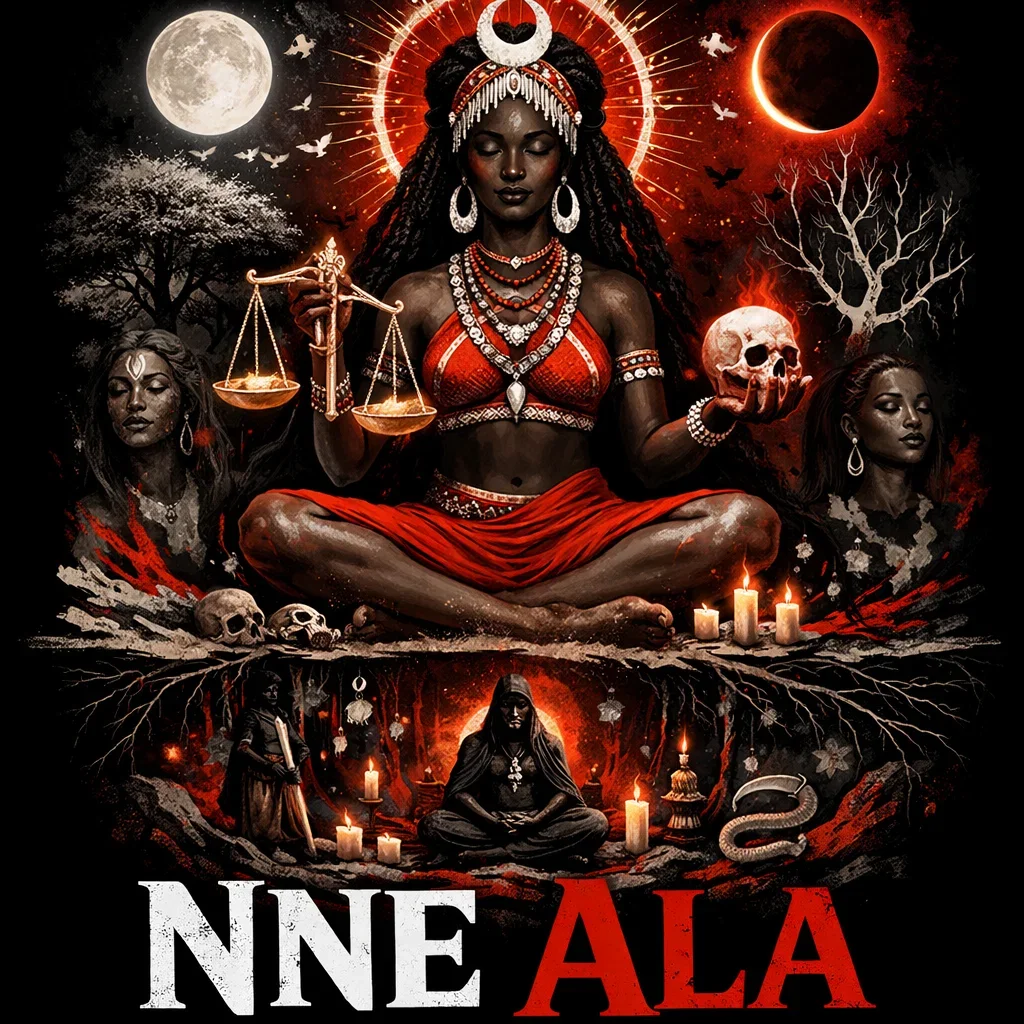
What We Can Learn From Ala on the Divine Feminine
Ala teaches us that the divine feminine is the foundation of life, morality, and balance. As Earth Goddess and ruler of the underworld, she holds both the visible and the unseen, reminding us that growth and healing require grounding and honest engagement with what lies beneath the surface. Through her roles as guardian of justice, fertility, and lived memory, Ala shows that right action sustains harmony, while every choice leaves an imprint on the world. Her aspects of Aka Ijite, Aka Ose, and Aka Odi reveal the importance of alignment, clear perception, and stillness, while Akwu Aghali teaches that true power and creation arise from patience and centered strength. Together, Ala’s wisdom calls us to live responsibly, stay rooted in truth, and create in harmony with natural law.
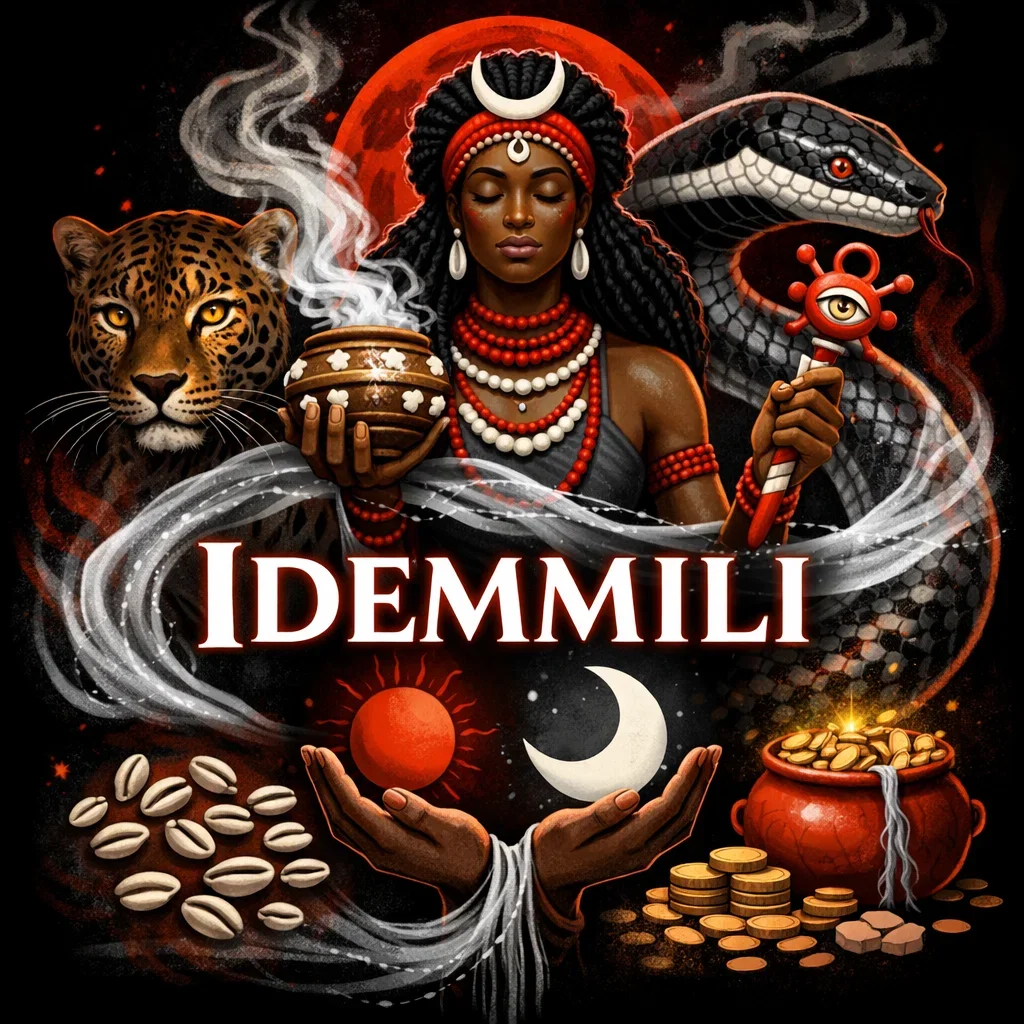
What We Can Learn From Idemmili on the Divine Feminine
Idemmili teaches us that the divine feminine is the power that creates, sustains, and brings balance through wisdom and flow rather than force. As the “pillar of water,” she shows that stability comes from adaptability; as leopard and python, she models quiet authority, protection, and continuity of life. As the bearer of Akpa Agwu, she reminds us that true wisdom is meant to heal and restore balance, not just to be known. Through Aka Ete and Ijite Ete, Idemmili reveals that creation begins with awareness and alignment, while her role as a goddess of clear thought, motherhood, and wealth teaches that clarity, care, and patience naturally give rise to prosperity. Together, her attributes show that the divine feminine leads by holding space, integrating opposites, and guiding life back into harmony.
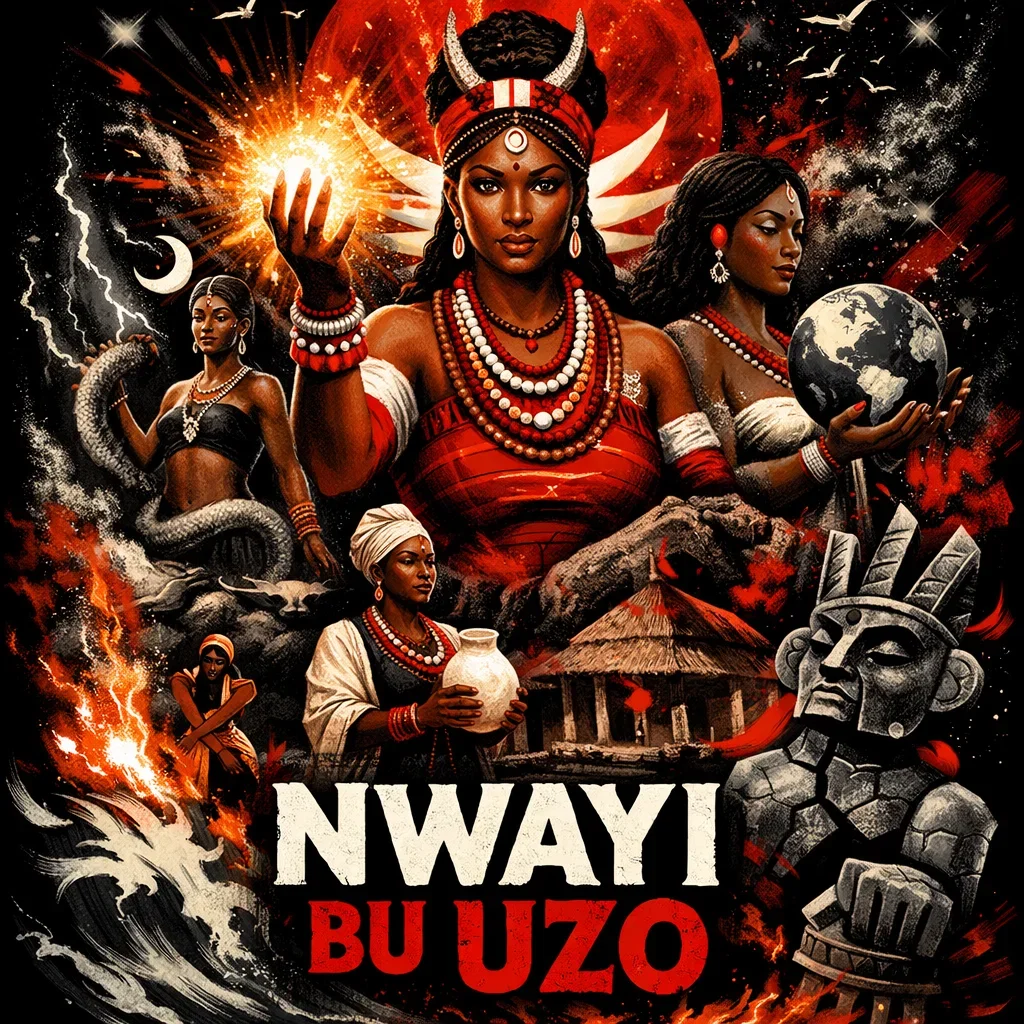
Nwanyi bu Uzo: Women Came First
“Nwanyi bu uzo” means woman came first, and it reflects an ancient Igbo understanding of life and order. Before patriarchy and the Ikenga period, Igbo society was matriarchal, with women at the center of creation, spirituality, leadership, and social organization. The feminine principle was seen as the source of life and balance, represented through powerful female deities and goddess-centered cosmology that governed the elements and the universe itself. Although this matriarchal order was later overtaken by masculine-dominant systems, it did not disappear. Today, that same matriarchal energy is returning, first at an energetic and spiritual level. Those who recognize and align with this shift, especially those who embody the divine feminine, can help restore balance, lead with wisdom and care, and shape a more grounded future for generations to come.
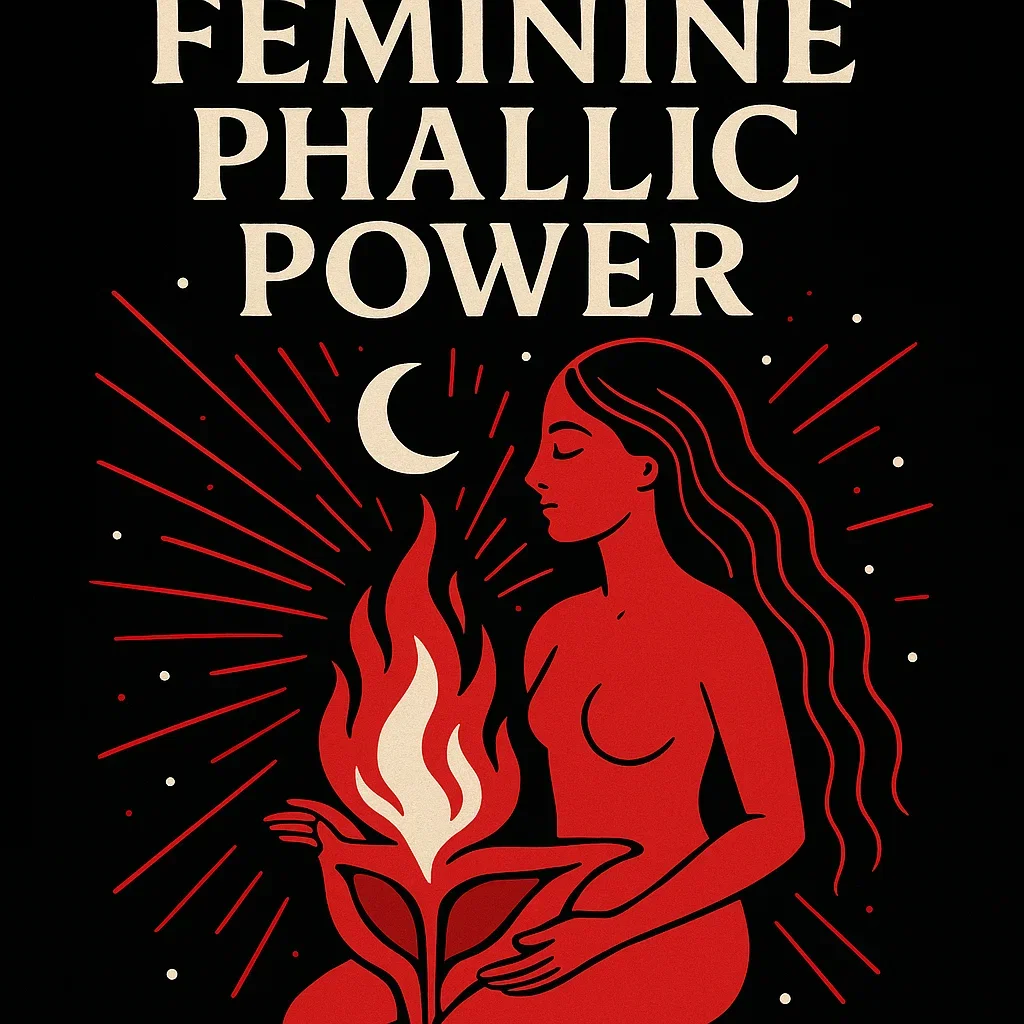
The Feminine Phallic Energy and the Power of Preservation
Beneath the womb lies a hidden current, a living flame of power ancient mystics identified as the woman’s phallic energy. It is not masculine, but the active spark that anchors her vitality, discernment, and creative authority. This inner fire sustains her magnetism, balances her polarity, and ensures that what she brings forth, whether in form of life, love, or vision, emerges strong and whole. When she guards and channels this sacred force, she becomes both vessel and wielder of creation, radiant in her sovereignty and irresistible in her balance.

Eze Nwanyi: The Role of the Igbo Priestess
The role of the Eze Nwanyi—the Igbo priestess holds significance in Odinani. The office of the priestess is not merely a religious functionary; she embodies the essence of divine feminine power as Agbara Nwanyi, she serves as a conduit between the spiritual and physical realms.